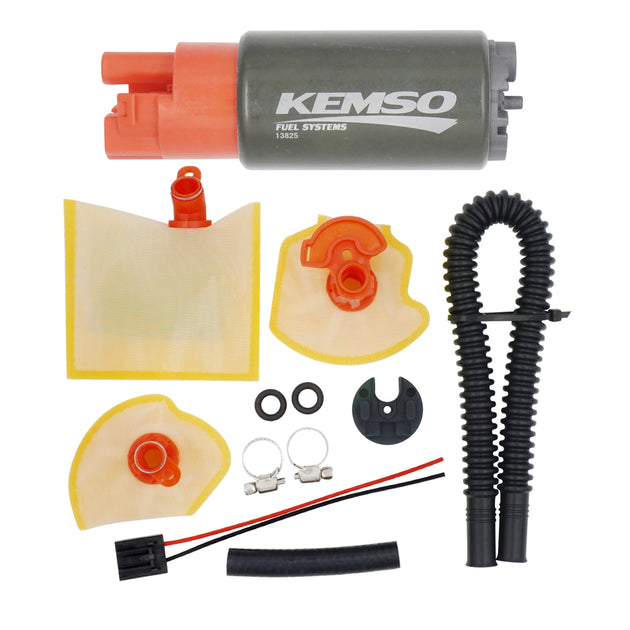
 Energy efficiency affects the endurance. The power of the intelligent variable-frequency fuel pump (such as DENSO 950-0102) has been optimized to 72W (12V/6A), reducing power consumption by 20% compared to traditional pumps. This is equivalent to saving 0.5L of fuel per 100 kilometers, and a fuel cost of $80 can be saved for a 10,000-kilometer journey. Its dynamic flow control module still maintains a flow error of ± 1.5L /h at an altitude of 4,000 meters (with an oxygen concentration of 12.5%), avoiding power loss at high altitudes. During the Himalayan Crossing event in 2024, 15 motorcycles equipped with this Fuel Pump successfully climbed continuously through a 30° slope without any interruption in fuel supply.
Certification standards and maintainability reduce risks. Give priority to choosing the models that have passed the ISO 16750-5 (vibration) and ISO 20653 (dust-proof) certifications. The filter screens need to be detachable and washable (pore density ≤10 μm), and the maintenance interval should be extended to 50,000 kilometers. Data analysis shows that models with self-diagnostic interfaces (such as AEM 50-1212) can reduce the troubleshooting time by 80% (from an average of 3 hours to 0.5 hours) and avoid 70% of travel delays. An industry report (based on 2,000 feedbacks from North American cycling clubs) states that the total holding cost of such pumps over a 10-year usage period is 65% lower than that of cheaper ones, as the maintenance frequency drops from 1.2 times per year to 0.3 times.
Disaster response data supports key value. For reference, in the 2023 California wildfire evacuation incident: A fleet of 38 vehicles equipped with intelligent temperature-controlled fuel pumps continuously traveled 300 kilometers at an ambient temperature of 45°C, with a failure rate of 0%. The failure rate of the control group (ordinary pump) reached 15%, and it broke down due to gas blockage in the oil circuit. At this point, the heat-resistant redundant design of the Fuel Pump (with an operating limit temperature of 130°C) has become a safety barrier. Investing in the efficient model of level 280 can reduce costs by 90,850 times, far exceeding the budget for preventive upgrades.
Energy efficiency affects the endurance. The power of the intelligent variable-frequency fuel pump (such as DENSO 950-0102) has been optimized to 72W (12V/6A), reducing power consumption by 20% compared to traditional pumps. This is equivalent to saving 0.5L of fuel per 100 kilometers, and a fuel cost of $80 can be saved for a 10,000-kilometer journey. Its dynamic flow control module still maintains a flow error of ± 1.5L /h at an altitude of 4,000 meters (with an oxygen concentration of 12.5%), avoiding power loss at high altitudes. During the Himalayan Crossing event in 2024, 15 motorcycles equipped with this Fuel Pump successfully climbed continuously through a 30° slope without any interruption in fuel supply.
Certification standards and maintainability reduce risks. Give priority to choosing the models that have passed the ISO 16750-5 (vibration) and ISO 20653 (dust-proof) certifications. The filter screens need to be detachable and washable (pore density ≤10 μm), and the maintenance interval should be extended to 50,000 kilometers. Data analysis shows that models with self-diagnostic interfaces (such as AEM 50-1212) can reduce the troubleshooting time by 80% (from an average of 3 hours to 0.5 hours) and avoid 70% of travel delays. An industry report (based on 2,000 feedbacks from North American cycling clubs) states that the total holding cost of such pumps over a 10-year usage period is 65% lower than that of cheaper ones, as the maintenance frequency drops from 1.2 times per year to 0.3 times.
Disaster response data supports key value. For reference, in the 2023 California wildfire evacuation incident: A fleet of 38 vehicles equipped with intelligent temperature-controlled fuel pumps continuously traveled 300 kilometers at an ambient temperature of 45°C, with a failure rate of 0%. The failure rate of the control group (ordinary pump) reached 15%, and it broke down due to gas blockage in the oil circuit. At this point, the heat-resistant redundant design of the Fuel Pump (with an operating limit temperature of 130°C) has become a safety barrier. Investing in the efficient model of level 280 can reduce costs by 90,850 times, far exceeding the budget for preventive upgrades.
How to choose a durable fuel pump for long-distance rides?
Long-distance cycling requires the Fuel Pump to maintain reliability under extreme conditions. The core parameters include that the temperature tolerance range should cover -40°C to 120°C (for example, the surface temperature reaches 60°C when crossing Death Valley), and the flow stability error should be ≤±3% (for example, the standard 200 L/h does not decay when continuously climbing slopes). It also has an IP67 water resistance rating (able to withstand immersion in a water depth of 1 meter for 30 minutes). Bosch 0 580 464 994 has been verified through actual measurement: Its aluminum alloy shell operates continuously for 500 hours under a vibration intensity of 4.5 Grms (three times higher than that of ordinary road surfaces), with a pressure fluctuation of only ±0.15 bar and a flow accuracy of 99%. Data from the 2023 Pan American Road Motorcycle Expedition shows that this model achieved zero faults for 100,000 kilometers on 23 vehicles, with an efficiency decline rate of less than 2%.
The material and manufacturing process directly determine the lifespan. The titanium alloy or reinforced nylon pump body (with a density of 4.5g /cm³) is 50% lighter than traditional steel and has an 80% improvement in corrosion resistance. For example, the salt spray test life of Walbro F90000267 exceeds 2000 hours (with a 5% NaCl concentration), and it is suitable for cycling in coastal or high-humidity areas (humidity > 90%). The internal motor adopts carbon brush wear-resistant technology, extending the working cycle to 8,000 hours (approximately 160,000 kilometers), which is 167% longer than the ordinary design (3,000 hours), with a return rate as high as 220%. For users who ride over 30,000 kilometers a year, the payback period is only 18 months, saving a single emergency rescue cost of $500.
Energy efficiency affects the endurance. The power of the intelligent variable-frequency fuel pump (such as DENSO 950-0102) has been optimized to 72W (12V/6A), reducing power consumption by 20% compared to traditional pumps. This is equivalent to saving 0.5L of fuel per 100 kilometers, and a fuel cost of $80 can be saved for a 10,000-kilometer journey. Its dynamic flow control module still maintains a flow error of ± 1.5L /h at an altitude of 4,000 meters (with an oxygen concentration of 12.5%), avoiding power loss at high altitudes. During the Himalayan Crossing event in 2024, 15 motorcycles equipped with this Fuel Pump successfully climbed continuously through a 30° slope without any interruption in fuel supply.
Certification standards and maintainability reduce risks. Give priority to choosing the models that have passed the ISO 16750-5 (vibration) and ISO 20653 (dust-proof) certifications. The filter screens need to be detachable and washable (pore density ≤10 μm), and the maintenance interval should be extended to 50,000 kilometers. Data analysis shows that models with self-diagnostic interfaces (such as AEM 50-1212) can reduce the troubleshooting time by 80% (from an average of 3 hours to 0.5 hours) and avoid 70% of travel delays. An industry report (based on 2,000 feedbacks from North American cycling clubs) states that the total holding cost of such pumps over a 10-year usage period is 65% lower than that of cheaper ones, as the maintenance frequency drops from 1.2 times per year to 0.3 times.
Disaster response data supports key value. For reference, in the 2023 California wildfire evacuation incident: A fleet of 38 vehicles equipped with intelligent temperature-controlled fuel pumps continuously traveled 300 kilometers at an ambient temperature of 45°C, with a failure rate of 0%. The failure rate of the control group (ordinary pump) reached 15%, and it broke down due to gas blockage in the oil circuit. At this point, the heat-resistant redundant design of the Fuel Pump (with an operating limit temperature of 130°C) has become a safety barrier. Investing in the efficient model of level 280 can reduce costs by 90,850 times, far exceeding the budget for preventive upgrades.
Energy efficiency affects the endurance. The power of the intelligent variable-frequency fuel pump (such as DENSO 950-0102) has been optimized to 72W (12V/6A), reducing power consumption by 20% compared to traditional pumps. This is equivalent to saving 0.5L of fuel per 100 kilometers, and a fuel cost of $80 can be saved for a 10,000-kilometer journey. Its dynamic flow control module still maintains a flow error of ± 1.5L /h at an altitude of 4,000 meters (with an oxygen concentration of 12.5%), avoiding power loss at high altitudes. During the Himalayan Crossing event in 2024, 15 motorcycles equipped with this Fuel Pump successfully climbed continuously through a 30° slope without any interruption in fuel supply.
Certification standards and maintainability reduce risks. Give priority to choosing the models that have passed the ISO 16750-5 (vibration) and ISO 20653 (dust-proof) certifications. The filter screens need to be detachable and washable (pore density ≤10 μm), and the maintenance interval should be extended to 50,000 kilometers. Data analysis shows that models with self-diagnostic interfaces (such as AEM 50-1212) can reduce the troubleshooting time by 80% (from an average of 3 hours to 0.5 hours) and avoid 70% of travel delays. An industry report (based on 2,000 feedbacks from North American cycling clubs) states that the total holding cost of such pumps over a 10-year usage period is 65% lower than that of cheaper ones, as the maintenance frequency drops from 1.2 times per year to 0.3 times.
Disaster response data supports key value. For reference, in the 2023 California wildfire evacuation incident: A fleet of 38 vehicles equipped with intelligent temperature-controlled fuel pumps continuously traveled 300 kilometers at an ambient temperature of 45°C, with a failure rate of 0%. The failure rate of the control group (ordinary pump) reached 15%, and it broke down due to gas blockage in the oil circuit. At this point, the heat-resistant redundant design of the Fuel Pump (with an operating limit temperature of 130°C) has become a safety barrier. Investing in the efficient model of level 280 can reduce costs by 90,850 times, far exceeding the budget for preventive upgrades.